
The Recruits of Gloucestershire
Henry IV, Part 2This thread follows Falstaff's opportunistic recruitment, the poor men's attempts to escape service, and the contrast between their real vulnerability and military rhetoric.
increasing Bearing strength in each event
 decreasing
Bearing strength in each eventdecreasingThe Commission Arrives
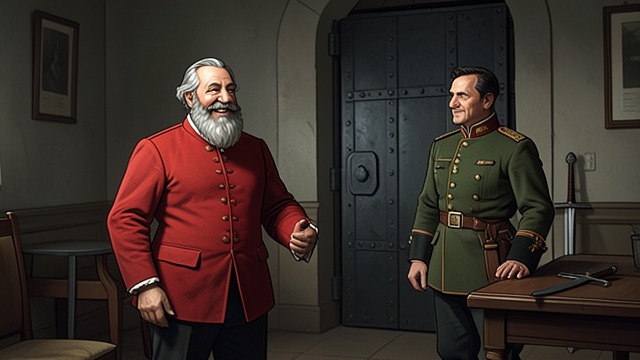
Recruitment as Business
A Captain's Opportunity
Falstaff arrives at Shallow's house needing men for the campaign. The commission gives him authority to turn local subjects into soldiers.
A Transactional System
The recruitment scene mixes public obligation with private advantage. The poor men are not simply a military force; their bodies become part of a system in which money and influence shape who serves.
The Mustered Men
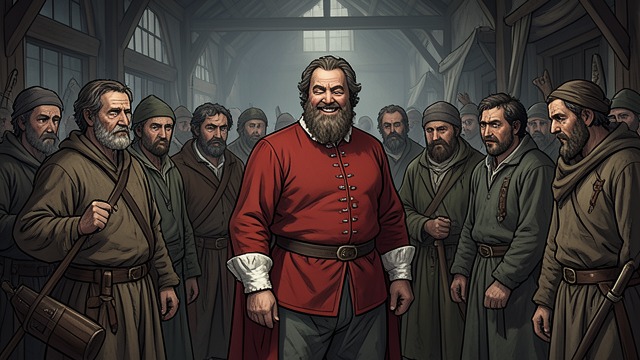
A Poor Muster
Names on the Roll
Mouldy, Shadow, Wart, Feeble, and Bullcalf appear before Falstaff. Their names and physical conditions invite jokes, but they also mark them as exposed subjects of compulsory service.
A Captain's Selection
Falstaff claims to choose for spirit rather than appearance and keeps men he thinks useful. His comic judgments reveal an officer who understands the practical value of bodies, but not necessarily their human cost.
Buying Exemption
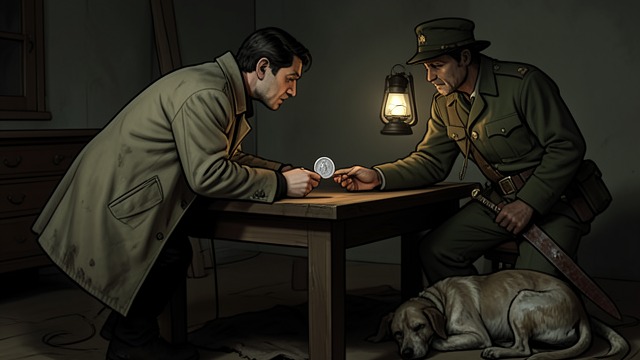
Money Against Service
Private Bargains
Bullcalf and Mouldy offer money to avoid being sent away. Their appeals draw on illness, age, and family need, while Bardolph acts as a point of access to the captain.
Unequal Burdens
Their ability to bargain suggests that service can be evaded by those able to pay. The scene's humor rests on a serious imbalance: poor men bear the demands of war while influence alters individual outcomes.
Feeble's Resolve
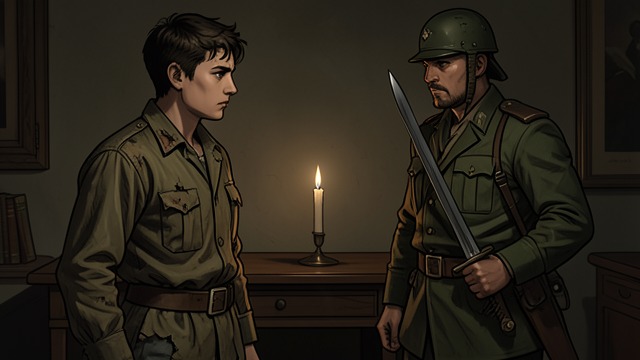
A Soldier's Acceptance
A Different Response
Feeble accepts that a man must die once and says that he will not bear a base mind. His plain reasoning contrasts with the self-serving evasions around him.
Courage Without Glory
Feeble's willingness does not make the recruitment system fair, but it gives the episode a measure of dignity. His resolve is one of the few forms of courage that Falstaff cannot claim for himself.
Falstaff's Calculation
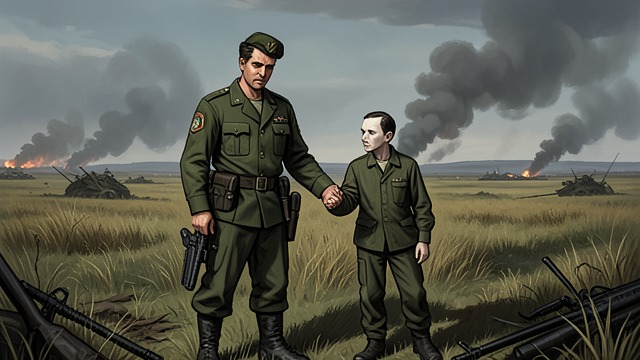
The Captain's Profit
Men as Instruments
Falstaff boasts that he prefers small, lean recruits because they present less of a target and can run quickly. He discusses them as tactical material rather than as individuals.
War's Comic Accounting
His jokes expose a recruiting officer who turns the campaign into a scheme for advancement and advantage. The comedy sharpens the contrast between the language of military honor and the practical exploitation of the powerless.
During Falstaff's passage through Gloucestershire
When Shallow presents the recruits to Falstaff
Immediately after the recruits are selected
As the selected men prepare to leave
After the justices have departed
